California
Garage door repair in Placer County, CA
Garage door repair and replacement in Placer County, sorted by what stopped working. Here half the homes were built before 1994 and the area averages 49 freezing nights a year.
Call (844) 833-1738 to schedule a visitCalls may be recorded. Describing the problem commits you to nothing.
Towns and communities in Placer County
What is different about Placer County
Built after the safety rule
Half the housing in Placer County was built in 1994 or later, after the federal opener standard took effect in 1993, so openers installed with these homes were made to it. The monthly reverse test printed in their manuals still applies: a door that stops reversing needs attention even when it is new.
Source: U.S. Census Bureau, American Community Survey 2019–2023 5-year estimates; CPSC Publication 523, non-reversing automatic garage door openers
Freezing nights
On average, Placer County has 49 days a year with a low at or below 32°F at the nearest NOAA climate normals station, about 10 miles away. In a freeze, the rubber seal along the bottom of a door can stick to the floor; free it before blaming the opener.
What stopped working?
-
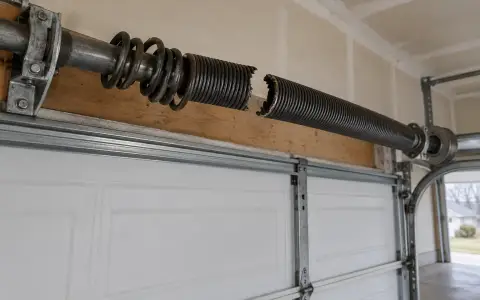 Broken springA loud bang, then a door that lifts a few inches or feels far too heavy.
 -
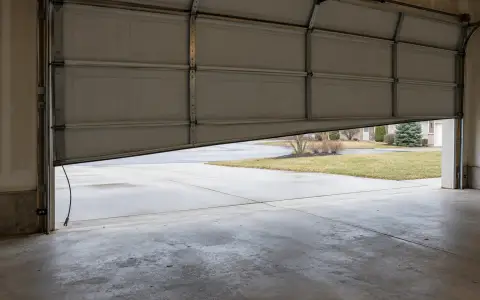 Snapped cableThe door hangs crooked, or a cable dangles beside the track.
 -
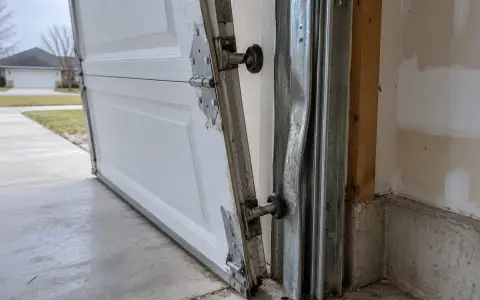 Off trackRollers have left the track and the door tilts, binds or grinds.
 -
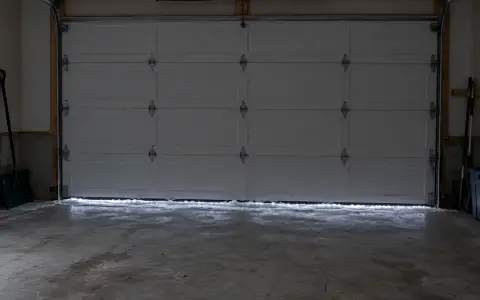 Won't openNothing happens, the opener hums, or the door lifts a few inches and quits.
 -
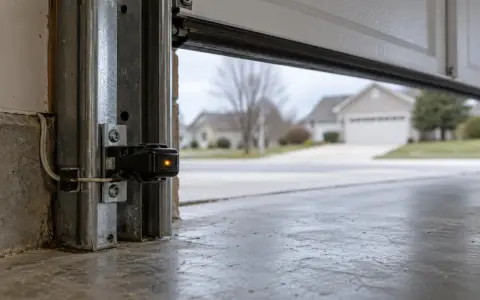 Won't closeThe door starts down and goes back up, or closes only while the button is held.
 -
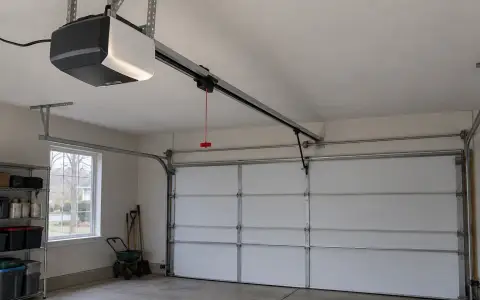 Opener runs, door doesn'tThe motor hums or runs and the door stays where it is.
 -
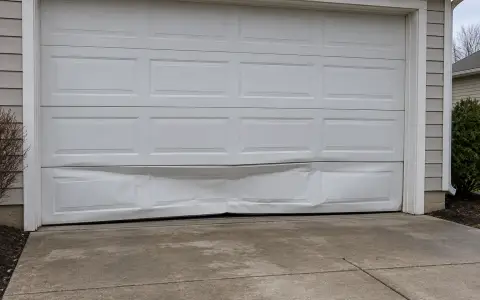 Car hit the doorPanels bent, tracks pushed out, and the garage may not close.
Who licenses the work in California
California has a license class for this work: D-28, Doors, Gates and Activating Devices. The CSLB describes it as a contractor who "installs, modifies or repairs all types of residential, commercial or industrial doors including overhead or sliding door assemblies." Under Business and Professions Code § 7048, a state license is needed for a job of $1,000 or more in labor and materials, or for any job that requires a building permit, and the small-job exemption does not cover anyone who advertises as a contractor or has employees.
Look up a license with the Contractors State License Board (CSLB)
California requires anyone hired to service or repair a residential opener to check, when the work is done, whether it reverses on contact with a rigid obstacle two inches high, and to affix a red certificate to an opener that fails (Health & Safety Code § 19890(e)). Since July 1, 2019, openers installed in the state must have a battery backup, and a replacement door may not be connected to an existing opener without one (§ 19892).
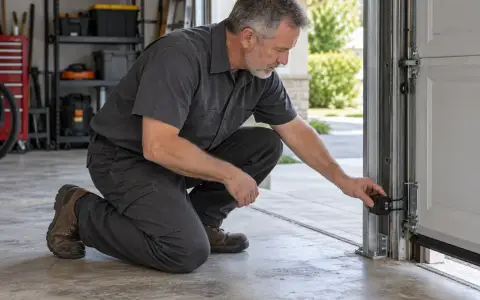
What you will be asked
- What stopped working, in one sentence: a bang and then the door would not lift, a crooked door, a door that goes back up.
- The door: sectional panels or one solid piece, one car wide or two, and roughly how old.
- The springs: a coil on a bar above the door, or springs along the tracks, and whether one shows a gap.
- The name on the opener’s motor housing, and roughly how old it is.
- Whether the door is open or closed right now, and whether a car is inside.
The line takes: repair, replacement and installation of garage doors and openers, for owners and renters, at homes and at commercial buildings. It is not for: buying parts, doors on box trucks and trailers, or a price quoted over the phone without a visit. The price is named after someone has seen the door.